
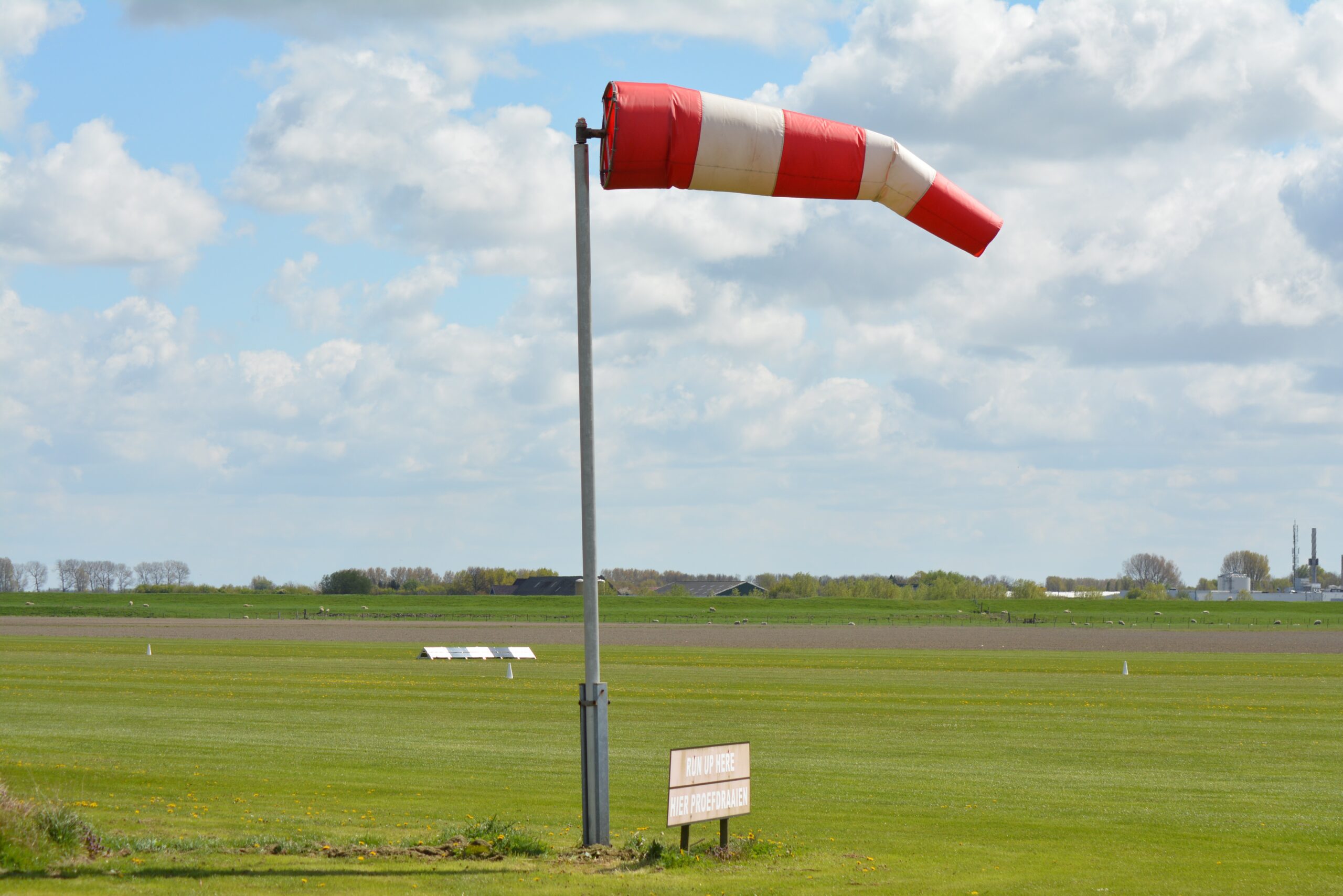
Wind… Something that may seem simple at first, yet it is often misunderstood in aviation. While the explanation I’m about to give you might seem obvious at first, it’s important to think about the concept of wind thoroughly. Let’s dive right in.
Behavior of Air
Firstly, let’s build a bit of an understanding about how air behaves.
Though it may be surprising, air is technically a fluid. When most people think of fluids, liquids come to mind. However, a fluid is anything that will flow. And, as you probably guessed by now, air flows.
So with that being said, air behaves just as any other fluid would. Think about water as an example. Imagine how it flows around objects and moves; air behaves in the same way.
Wind Does not Come out of the Air
As Wolfgang Langwiesche stated in his famous book (which you should definitely read if you haven’t already) wind does not come through the air, it is the air.
Think about it, if the wind “blows”, will one side of the airborne airplane receive a higher pressure force than the other?
However surprising it may be, the answer is no. This is because wind is not something that “blows” or comes through the air. It may seem this way because on the ground, we remain in place, and the wind blows over us, thus making uneven pressure on either side of our bodies.
However, the same cannot be said for the airplane.
This is because the airplane is completely surrounded by the air. Thus, the airplane’s behavior is directly affected by the air. The wind “blowing” is simply a fancy term for a giant mass of moving air. Thus, the airplane is flying through a giant mass of moving air.
When this mass of air begins to move, the airplane will remain in place in relation to the air. However, somone standing on the ground watching the plane would say that the wind was blowing the airplane off course. This is because the viewer on the ground is describing the airplane in relation to the ground.
To reinforce this point a little more, I want you to picture a boat crossing a river. What happens as it crosses? It moves through the water, sure, but the current also carries the boat downstream, away from its aiming point. The whole mass of moving water moves together, as well as anything floating in it.
The airplane works just the same way. Picture an airplane coming in to land on the runway with a crosswind. The runway is the target, the aiming point, and the wind would behave just as the flowing water did in the above example. The airplane moves with the air.
How it Affects the Airplane
With that explained, the next thing we should take a look at is how the wind affects the airplane. If the wind is blowing from behind the airplane (a tailwind), how would this affect the airplane? Will it go faster, or slower? What about if there is a headwind?
Well… It depends on how you look at it!
Firstly, an important thing to understand is that there are different types of speeds. In this case airspeed and groundspeed are the ones we will be focusing on.
Let’s start with the scenario of a tailwind.
Tailwinds increase groundspeed, meaning the airplane will travel faster in relation to the ground. So with a tailwind, you’re going to be more fuel effcient as you will cover more ground with the same amount of fuel.
But, how does it affect airspeed? Some argue that tailwinds increase airspeed, while others argue that it decreases it. The truth is, airspeed doesn’t change with tailwinds.
If you don’t know what airspeed is, I recommend you check out this article.
So what about headwinds? Headwinds are slightly more complex…
Firstly, headwinds increase airspeed because the air will flow faster around the aircraft’s skin. Groundspeed decreases as headwind increases because the wind carries the aircraft backward in relation to the ground, thus causing it to travel slower over the ground.
This is why airplanes will sometimes be able to land at extremely low speeds; speeds so low that most think it would stall. It appears this way because the speed you can visually “see” is ground speed. In reality, when you see videos like this, the airspeed is quite high and certainly safe.
But the thing that makes headwinds more complex, is that they can be both favorable and unfavorable, depending on the part of the flight.
For takeoffs and landings, headwinds are favorable because they allow us to achieve each manoeuvre over less distance. In other words, they increase performance.
However, headwinds can be a real pain during the cruise phase of flight. As mentioned before, headwinds decrease ground speed, so this will make the flight take longer and be far less fuel efficient.
Summary
Wind is not something that comes through the air, but rather a giant mass of air moving altogether. There is a large difference between the two, and understanding the way wind really works is essential to comprehending the way aircraft behave in windy conditions.